How Delta Dental Works: Simple Guide to Plans, Coverage, and Benefits
 Posted in Health Insurance last updated on December 4, 2025
Delta Dental is one of the largest dental insurance companies in the country, serving millions of Americans through a national network of Delta Dental companies. Yet most people never fully understand how their dental insurance plans work, what dental services they cover, or how out-of-pocket costs are calculated. This guide breaks everything down so you can confidently choose the right dental benefit plan for your needs.
Table of contents
- What Is Delta Dental and How Does It Work?
- The Two Main Delta Dental Plan Types
- What Delta Dental Plans Typically Cover
- How Delta Dental Coverage Works
- Using the Delta Dental Network
- State-by-State Differences
- Key Terms Made Simple
- Tips to Maximize Your Delta Dental Benefits
- Choosing the Right Delta Dental Plan
- How Abrams Insurance Solutions Can Help
If you’re specifically researching orthodontics, you can also explore our companion guide: Does Delta Dental Cover Invisalign?
Learn if Delta Dental covers Invisalign. Explore PPO and HMO plan benefits, costs, coverage amounts, and what’s included in your dental plan.
What Is Delta Dental and How Does It Work?
Delta Dental operates through multiple state-based companies under one nationwide umbrella. Your specific plan provisions and cost ranges may vary depending on where you live, but the core structure is consistent.
Here’s how a Delta Dental plan works:
- You enroll in an individual plan, family plan, or employer-sponsored plan.
- You pay a monthly premium to the insurance company.
- You visit an in-network dentist for reduced fees or an out-of-network dentist at higher rates.
- The plan covers part of the dental procedures based on your benefit tiers.
- You pay any applicable deductibles and out-of-pocket costs.
It’s designed to make dental care services more predictable, more affordable, and easier to access for patients of all ages.
The Two Main Delta Dental Plan Types
Delta Dental offers two primary dental insurance plans. Each one works differently, and your treatment cost estimates depend heavily on which type you select.
Delta Dental PPO Plan
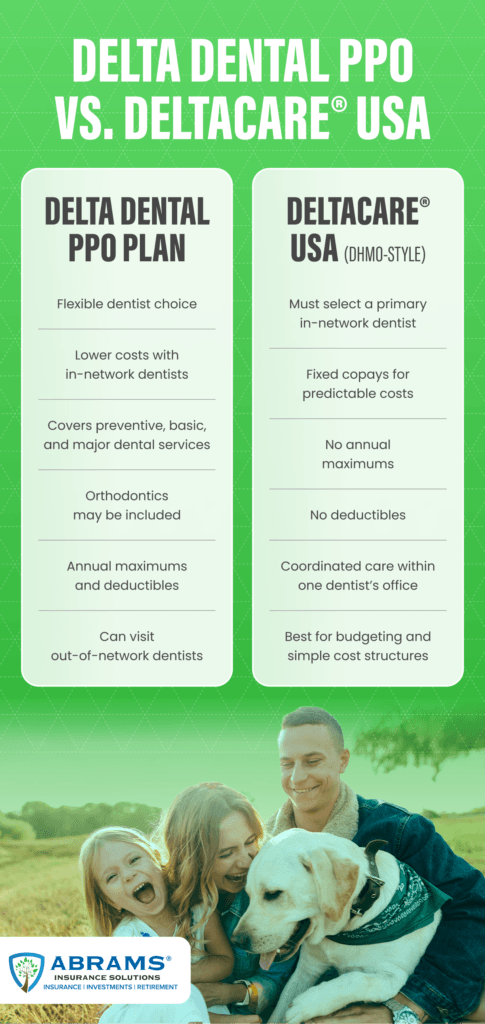
A Delta Dental PPO plan is the most flexible option.
- Choose any licensed dentist, in-network or out-of-network.
- Save the most with in-network dentists who agree to reduced rates.
- Coverage typically includes preventive services, basic services, and major services.
- Orthodontic services and implants may be included in higher-tier plans.
- Annual maximums and deductibles apply.
- greater freedom in choosing a dentist’s office.
DeltaCare® USA (DHMO-Style)
Best for predictable budgeting.
- Must select a primary in-network dentist.
- Costs are fixed copays rather than percentage-based coinsurance.
- No annual maximums.
- No deductibles.
- Excellent for straightforward pricing and consistent dental care services.
What Delta Dental Plans Typically Cover
While your dental benefit plan may vary by state, most coverage categories fall into the same structure:

Preventive Services (Often 100% Covered)
These services help protect your oral health:
- Cleanings
- Exams
- X-rays
- Sealants (depending on plan provisions)
Basic Services
These address early or moderate dental issues:
- Fillings
- Simple extractions
- Emergency dental services
Major Services
These cover more extensive dental procedures and typically have higher out-of-pocket costs:
- Crowns
- Root canals
- Dentures
- Bridges
- Dental implants (covered on many PPO plans)
Orthodontic Services
Coverage depends on the benefit plan:
- Braces
- Invisalign
- Retainers
If you’re specifically interested in Invisalign, see our full breakdown here: Does Delta Dental Cover Invisalign?
How Delta Dental Coverage Works
Understanding how your plan provisions apply helps you estimate the actual cost of treatment before you sit in the dentist’s office.
Coverage Amounts
Many Delta Dental PPO plans follow the classic structure:
- 100% for preventive services
- 80% for basic dental care services
- 50% for major services
Deductibles
A deductible is the amount you pay before the plan begins paying for basic or major services. Many plans use a $50 per-person deductible.
Annual Maximums
This is the total amount the insurance company will pay for covered dental procedures in a calendar year.
Lifetime Maximums
Typically used for orthodontic services. Once met, all treatment costs become your responsibility.
Waiting Periods
Many plans include waiting periods before basic or major services can begin.
Out-of-Pocket Costs
Your total out-of-pocket costs depend on:
- The procedure you need
- Whether you use an in-network dentist
- Whether you choose an out-of-network dentist
- Your plan’s coverage percentages
- Your remaining annual maximum
- The actual cost of treatment set by the dentist
Using the Delta Dental Network
Delta Dental has one of the largest networks in the country.
Why the Network Matters
- In-network dentists agree to reduced contracted rates.
- Out-of-network dentists may charge higher amounts, increasing your out-of-pocket costs.
- PPO plans allow you to use either, while DeltaCare® USA requires in-network care.
- Using in-network providers keeps treatment cost estimates much more predictable.
State-by-State Differences
Every Delta Dental company sets its own state-level plan provisions.
For example:
- California’s Individual & Family PPO Premium plan covers orthodontics at 50% up to a lifetime maximum.
- Other states may offer different coverage levels or cost ranges.
Always check your specific policy details before relying on coverage assumptions.
Key Terms Made Simple
Here’s a quick glossary to help you understand your dental insurance plan:
- Coinsurance: Percentage of the bill you pay after insurance pays its share.
- Copay: Fixed dollar amount you pay for certain dental services.
- Deductible: Amount you pay before insurance begins covering services.
- Annual Maximum: Highest amount the plan will pay for dental care each year.
- Lifetime Maximum: Maximum benefit amount for select services, such as orthodontics.
- Waiting Period: Length of time before specific services become eligible for coverage.
- Pre-Treatment Estimate: A written estimate from the insurance company showing your expected costs.
- Dental Emergency: An urgent issue requiring immediate care, such as severe pain, infection, or trauma.
Tips to Maximize Your Delta Dental Benefits
- Use your preventive services every six months — they’re often fully covered.
- Choose in-network dentists to reduce out-of-pocket costs.
- Ask for pre-treatment cost estimates before major procedures.
- Plan dental care early in the year to maximize your annual benefits.
- Compare dental insurance plans carefully if you’re buying individually.
Choosing the Right Delta Dental Plan
Selecting a dental benefit plan depends on the dental care services you expect to need.
Choose Delta Dental PPO if you want:
- Flexibility to see any dentist
- Orthodontic and implant coverage
- Options for out-of-network dentists
- Coverage for a wide range of dental procedures
Choose DeltaCare® USA if you prefer:
- Predictable copays
- No deductibles or annual maximums
- A primary dentist managing your care
- Lower costs for routine dental procedures
How Abrams Insurance Solutions Can Help

Choosing the right Delta Dental plan can feel overwhelming, especially when comparing out-of-pocket costs, treatment cost estimates, and plan provisions across multiple states and plan types. At Abrams Insurance Solutions, we make the process simple.
We help you:
- Understand your coverage and cost ranges
- Compare PPO and DeltaCare® USA options
- Estimate your actual cost for dental procedures
- Choose a plan that supports your long-term oral health
Whether you need preventive services, major dental procedures, orthodontics, or Invisalign, we’ll help you navigate the options with clarity.
Click below to compare Delta Dental plans and find the right dental insurance plan for your needs.